Digital marketing is no longer simply about posting content, running advertisements, or getting more followers. Today, successful digital marketing is about creating a strong online presence that connects the right audience with the right business at the right moment.
As customer behaviour continues to change, businesses need more than individual marketing activities. They need a connected digital strategy that turns visibility into trust, and trust into measurable growth.
1. Being Online Is Not Enough
Almost every business has some form of online presence today. A website, Instagram page, Google Business Profile, or Facebook account may help a business appear online—but presence alone does not guarantee results.
A professional digital strategy focuses on questions such as:
- Can potential customers find your business?
- Does your website create a good first impression?
- Is your content answering what customers actually want to know?
- Are your advertisements reaching the right audience?
- Can you measure where your leads are coming from?
The goal is not simply to be visible. The goal is to be visible for the right reasons and to the right people.
2. Search, Social Media and Advertising Must Work Together
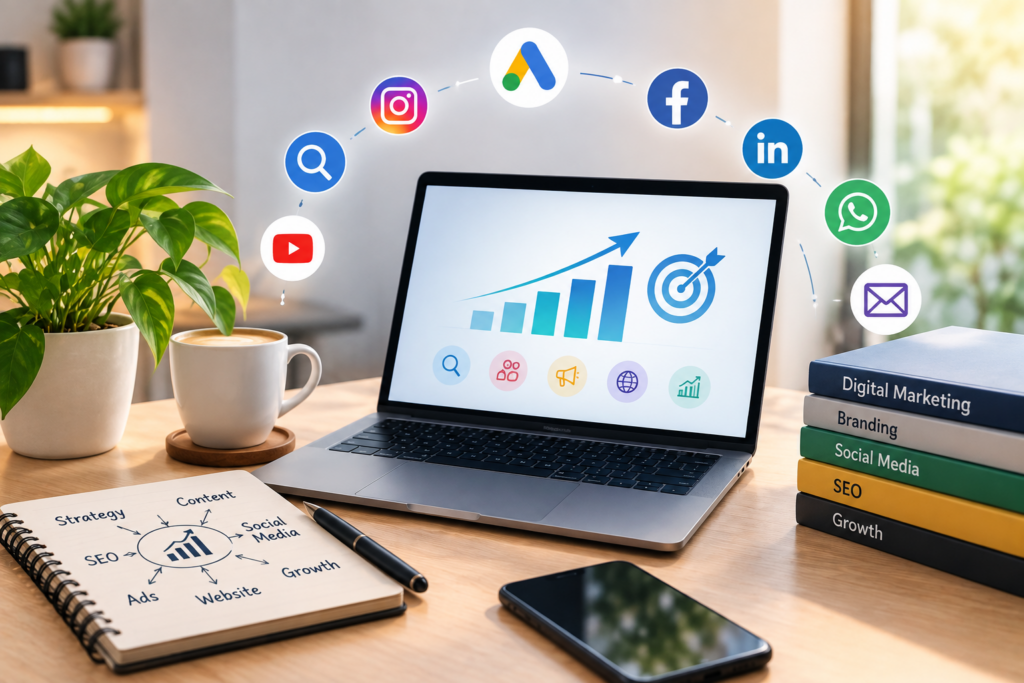
SEO, Social Media Marketing, and paid advertising are often treated as separate services. In reality, they can work together to create a stronger customer journey.
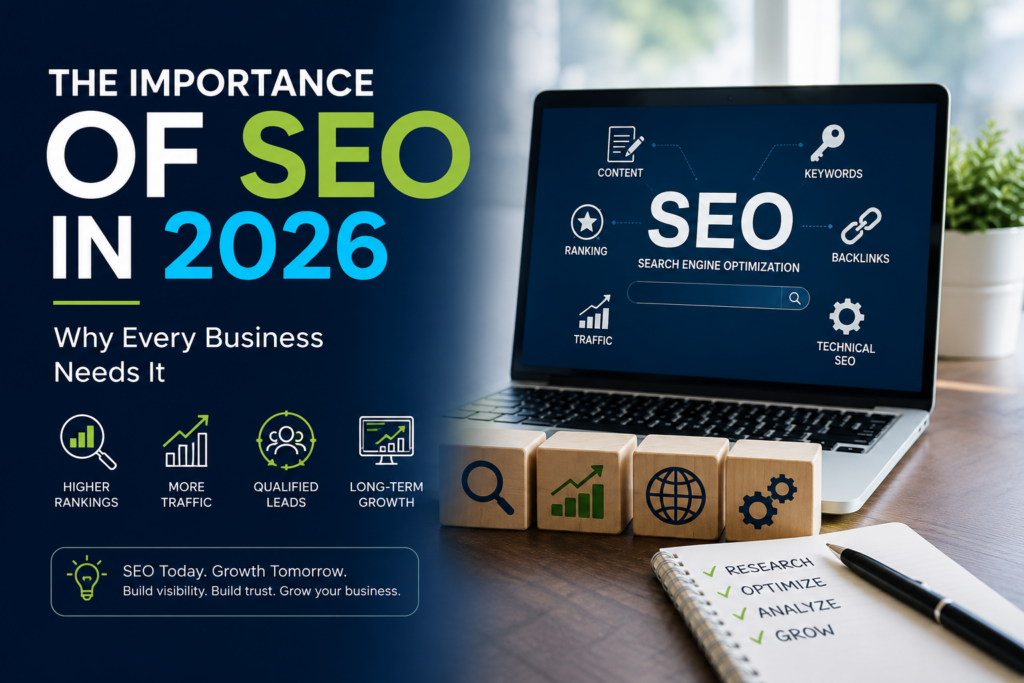
SEO helps people discover your business through search engines.
Social Media Marketing helps you build awareness, communicate your brand personality, and maintain relationships with your audience.
Google Ads and PPC can help businesses reach people who are actively searching for specific products or services.
When these channels support one another, digital marketing becomes more than a collection of individual campaigns. It becomes a connected system for attracting and converting potential customers.
3. Content Should Have a Purpose
Posting every day does not automatically mean having a good content strategy.
Effective content should have a clear purpose. It might educate an audience, answer a common question, demonstrate expertise, introduce a service, build trust, or encourage a potential customer to take action.
A strong content strategy considers three important stages:
Attract → Engage → Convert
First, content attracts people who have a relevant problem or interest. Then, useful information helps build engagement and credibility. Finally, the right message and call-to-action can guide interested visitors towards becoming leads or customers.
4. Your Website Is More Than a Digital Brochure
A website is often the centre of a business’s digital presence.
A visually attractive website is useful, but design alone is not enough. A professional website should also provide a clear user experience, easy navigation, useful information, mobile-friendly pages, and strong calls-to-action.
Visitors should quickly understand:
Who you are → What you offer → Why they should trust you → What they should do next.
This combination of design, content, usability, and conversion strategy can make a significant difference to online performance.
5. Data Makes Marketing Smarter
One of the biggest advantages of digital marketing is the ability to measure performance.
Businesses can analyse metrics such as website traffic, search visibility, engagement, leads, conversion rates, advertising performance, and customer behaviour.
Instead of asking only, “How many people saw my advertisement?”, marketers can ask better questions:
Did the campaign reach the right audience?
Did visitors take action?
Which channel generated valuable leads?
What can be improved in the next campaign?
This is where data-driven marketing becomes powerful. Numbers are not just reports—they are information that can guide better decisions.
6. AI Is Changing the Way Marketers Work
Artificial Intelligence is becoming an important part of modern digital marketing.
AI can assist marketers with tasks such as content research, customer insights, idea generation, data analysis, automation, and campaign optimisation.
However, technology should support marketing strategy rather than replace human understanding. Creativity, brand voice, customer relationships, and strategic decision-making still require a human perspective.
The future of digital marketing is therefore not simply AI vs. humans. It is about using technology intelligently while keeping the customer at the centre of every strategy.
7. The Future Belongs to Connected Marketing
Digital marketing is moving towards a more integrated approach.
SEO can bring organic traffic. Social media can build relationships. Paid advertising can create targeted reach. Content can establish authority. A well-designed website can convert attention into action.
When these elements are planned together, businesses can create a consistent digital journey for their customers.
Conclusion
Digital marketing is not about chasing every new trend. It is about understanding your audience, building a trustworthy online presence, creating valuable experiences, and continuously improving through data.
The businesses that approach digital marketing as a long-term growth strategy—not just a promotional activity—can build stronger digital identities and more meaningful relationships with their customers.